Free Pain Management Templates – Managing chronic or recurring pain becomes easier when you track patterns instead of relying on memory during short doctor visits. Free pain management templates—printable pain diaries, trackers, logs, and related worksheets—help you record intensity, location, triggers, relief methods, medications, and daily impact. These tools support clearer conversations with healthcare providers across the United States and can reveal patterns that improve self-management.
This resource page explains the value of these templates, how to use them effectively, and where to download legitimate free printable versions from trusted sources.
Why Use Free Pain Management Templates?
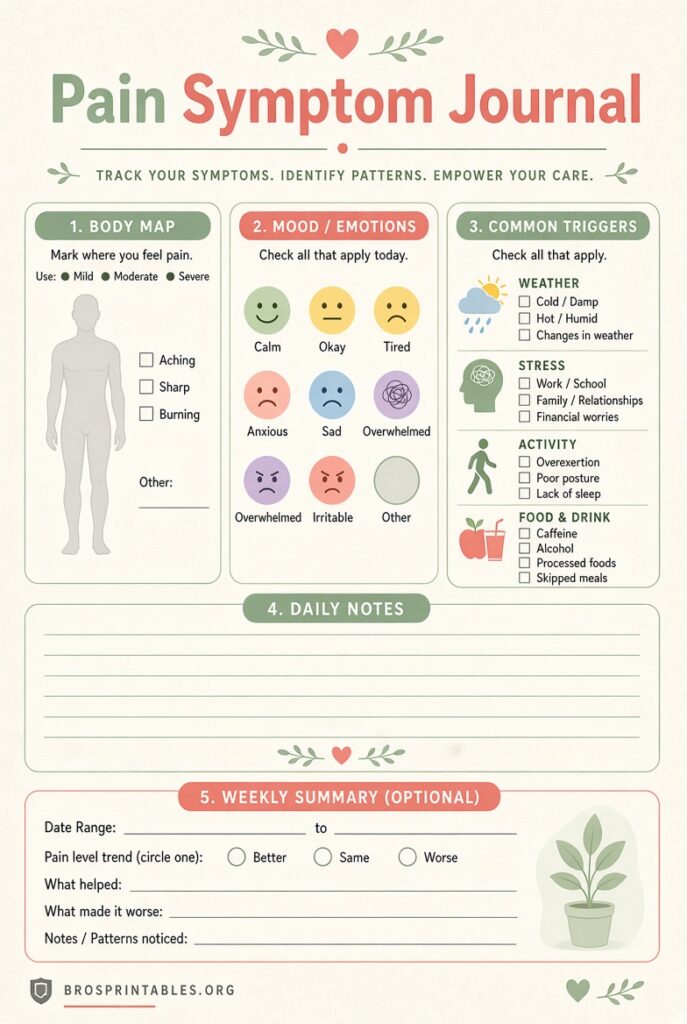
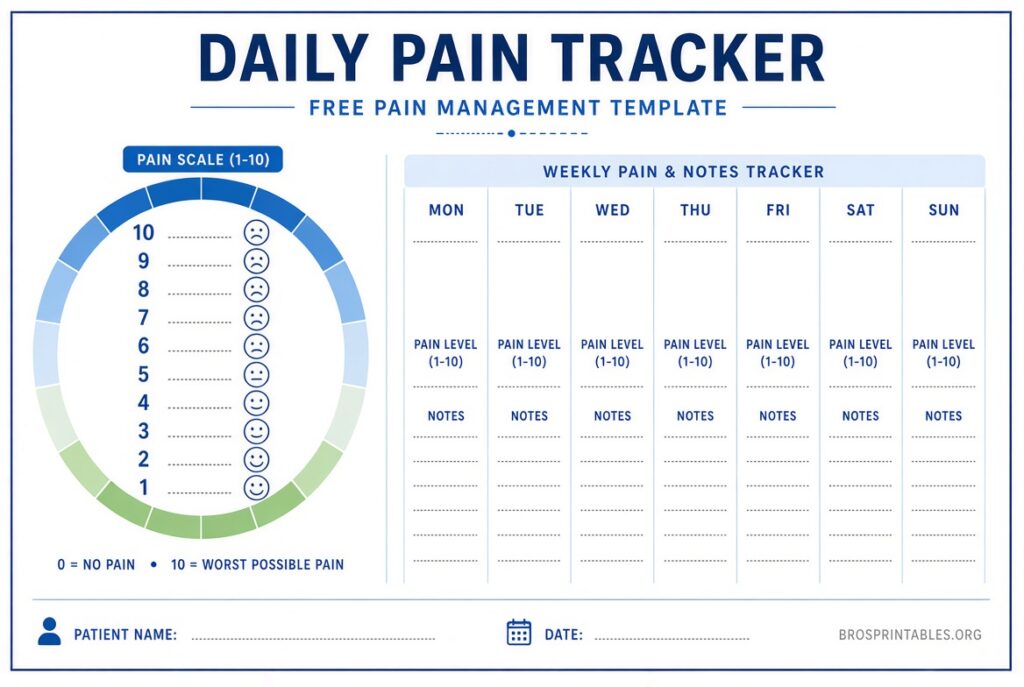
A single 0–10 pain rating captured in a clinic often misses important details: time of day, activity that triggered a flare, what eased it, sleep disruption, or functional limits (for example, difficulty walking or working). A consistent pain diary or tracker fills that gap.
Patients who bring completed records frequently report more productive appointments because providers can review trends quickly. Templates also support self-management by helping identify triggers, effective strategies, and progress over days or weeks. Common formats include daily logs, weekly summaries, body diagrams for location, medication trackers, and goal-setting worksheets.
These free tools work for many conditions involving persistent pain, including back pain, arthritis, neuropathy, and other chronic issues. They are simple communication aids—not diagnostic tools—and work best alongside professional medical care.
What to Include in a Pain Tracker or Diary?
Effective free pain management templates usually capture:
- Date and time of day
- Pain intensity (0–10 numeric scale)
- Location and quality (sharp, dull, burning, aching, radiating)
- What you were doing when pain started or worsened
- Factors that helped or made it worse (movement, rest, heat, ice, medication, position)
- Impact on function, sleep, mood, or daily activities
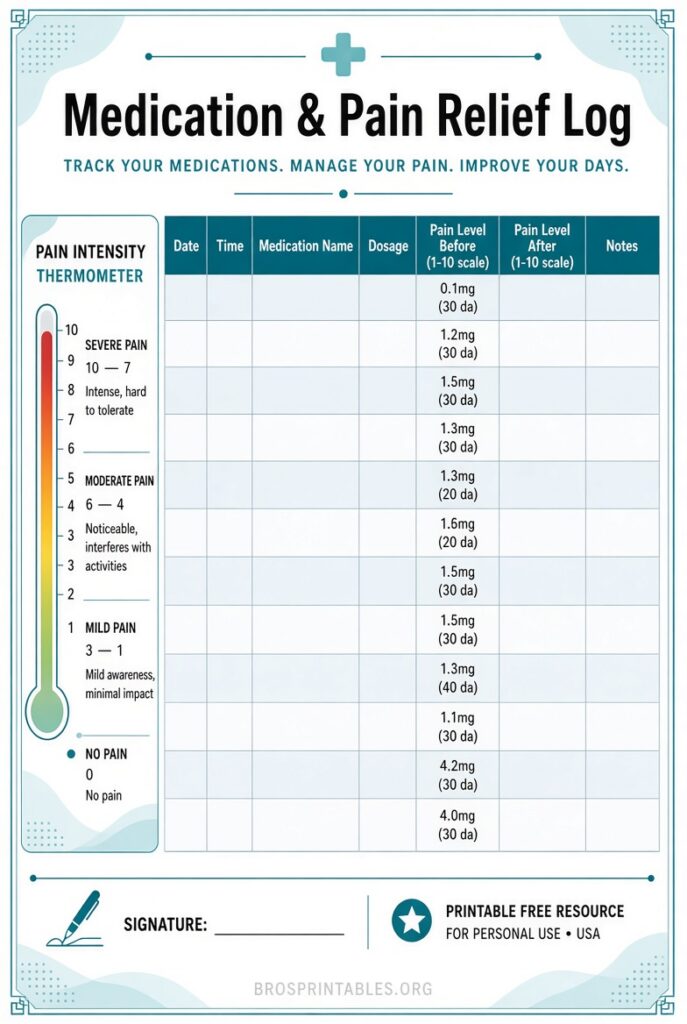
- Medications or treatments used and their effect
Keep entries brief so the habit sticks. Tracking for three to seven days before an appointment often provides useful data; longer periods help reveal weekly or monthly patterns.
Trusted Places to Download Free Printable Pain Management Templates
Prioritize resources from reputable health organizations, research institutes, or clinical practices that offer direct, no-cost downloads without misleading claims.
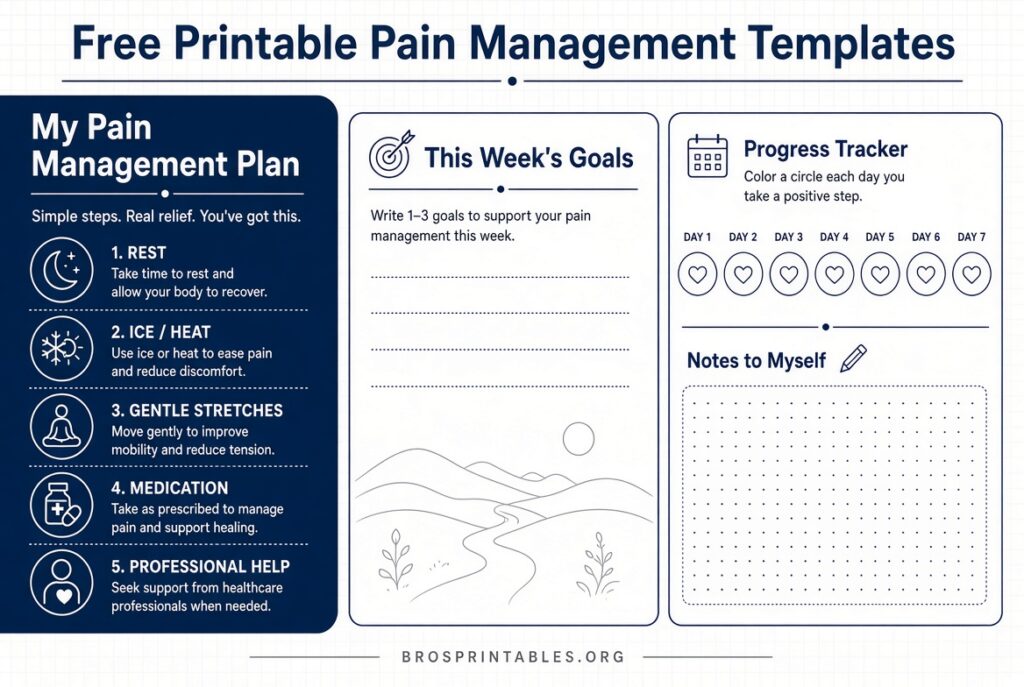
One highly recommended option is the free printable tools from the Toolkit for Managing Persistent Pain, developed by patient partners and researchers at the Center for Accelerating Care Transformation (ACT Center) within Kaiser Permanente Washington Health Research Institute. These include a pain tracker (date/time, location, descriptive words, severity, functional limits, treatments tried, what helps or worsens pain), a medicine tracker, a treatment tracker, a SMART goal worksheet, and a list of words for describing pain. Download the printable pages directly here. The full free toolkit (with additional guidance on self-management and preparing for appointments) is available here.
A practical one-page free pain diary template designed for use before pain management appointments is offered by City Pain Center. It includes fields for date, time of day, pain rating, location, activity, what helped, what made it worse, and functional impact. Download the printable PDF here.
PainClinics.com provides free pain tracking templates in daily, weekly, and monthly formats (available as interactive forms or Excel downloads) focused on monitoring symptoms, triggers, and communication with providers. Access them here.
These sources emphasize free, printable or downloadable tools without requiring payment for the core templates. Always verify the current download works and consult your healthcare provider about how to interpret the information.
Free Pain Management Templates
Practical Tips for Using Your Templates
Print several copies or keep a digital version on your phone or tablet. Fill them out at consistent times (morning, afternoon, evening) or right after noticeable changes in pain. Be honest and specific but concise. Bring the completed sheets (or clear photos) to appointments rather than trying to summarize everything verbally.
Pair a basic pain diary with a medication or treatment tracker if you are trying new approaches. Review entries weekly yourself to spot patterns—such as worse pain after certain activities or better nights after using heat. Adjust your routine based on what the data shows, then discuss findings with your care team.
Store completed pages in a simple binder or folder for easy reference over time.
Brief FAQ
How long should I track before seeing a doctor?
Three to seven days of consistent entries is often enough for an initial appointment. Longer tracking helps with ongoing care or when evaluating a new treatment.
Are these templates only for chronic pain?
They work well for both acute flare-ups and persistent pain. The more variable the symptoms, the more useful structured tracking becomes.
Do I need special software?
No. Most free pain management templates are simple PDFs designed for home printing on standard letter-size paper. Some sites also offer Excel versions for digital use.
Can these replace medical advice?
No. Templates improve communication and self-awareness but do not diagnose conditions or replace evaluation by a qualified healthcare professional.
Free pain management templates give you a practical, low-cost way to organize your experience and partner more effectively with your care team. Start with one of the trusted downloads above, use it consistently for a short period, and bring the results to your next visit. Small, regular records often lead to clearer insights and better-supported decisions about managing pain.