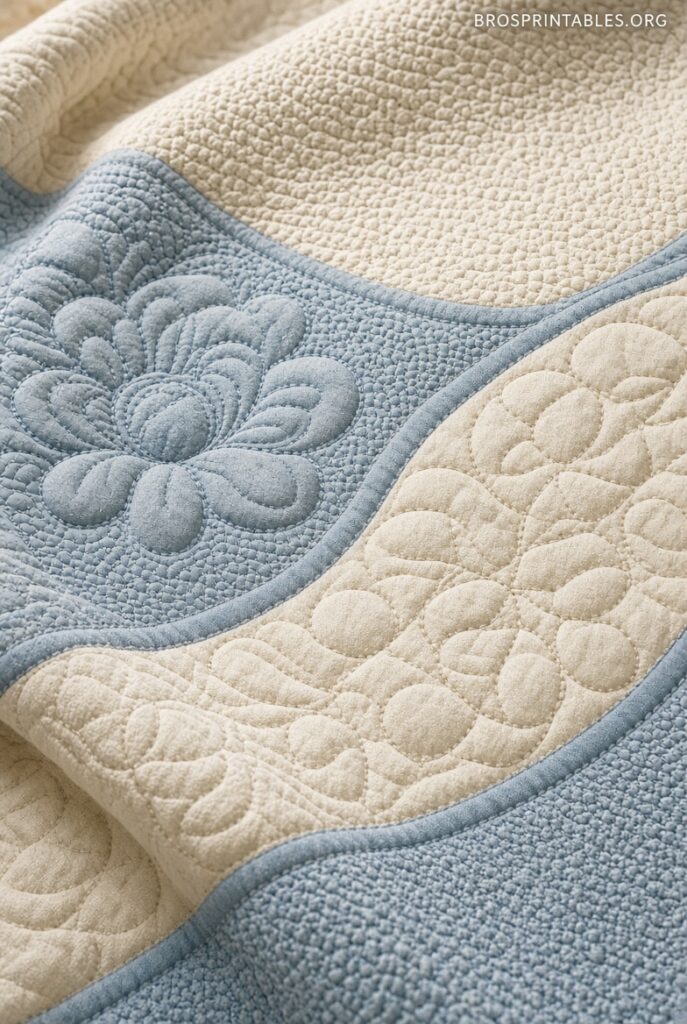
Free Motion Quilting With Templates – Free motion quilting with templates gives home-machine quilters in the USA a practical way to create smooth, consistent designs without relying only on freehand skill. Templates—whether printable paper practice sheets, stencils, or physical guides—help beginners build muscle memory and let experienced quilters fill large areas or add precise motifs more confidently.
This resource page explains the technique, shows how templates fit into the process, and points you to legitimate free printable options so you can start practicing right away.
What Is Free Motion Quilting With Templates?
Free motion quilting (FMQ) means dropping or covering the feed dogs on your domestic sewing machine and moving the quilt sandwich freely under a darning or free-motion foot. You control direction, creating curves, loops, feathers, meanders, pebbles, and more.
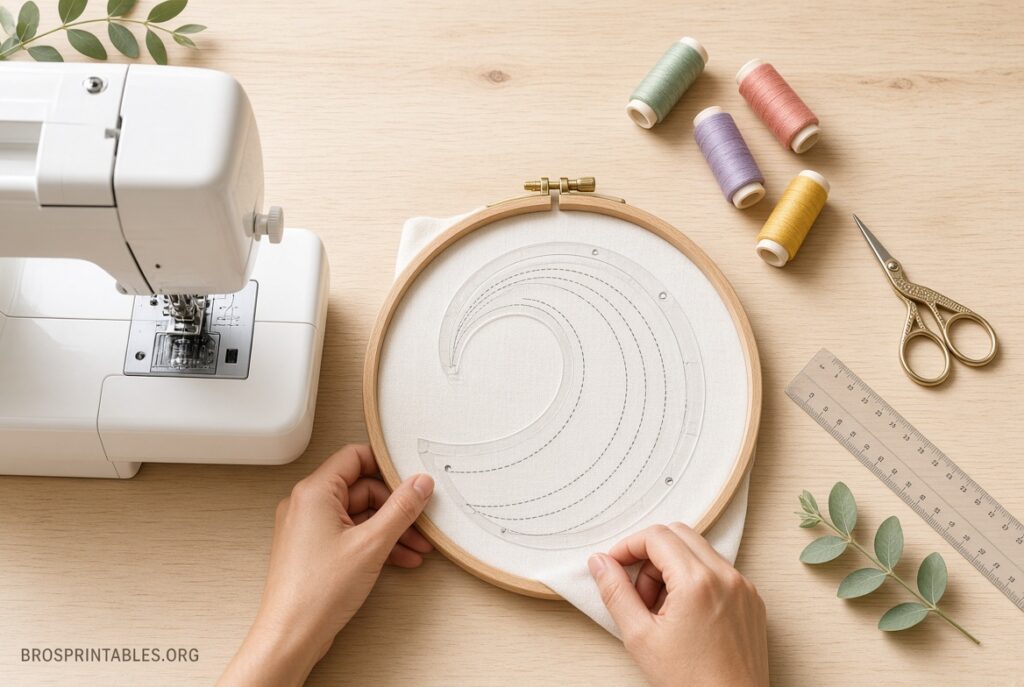
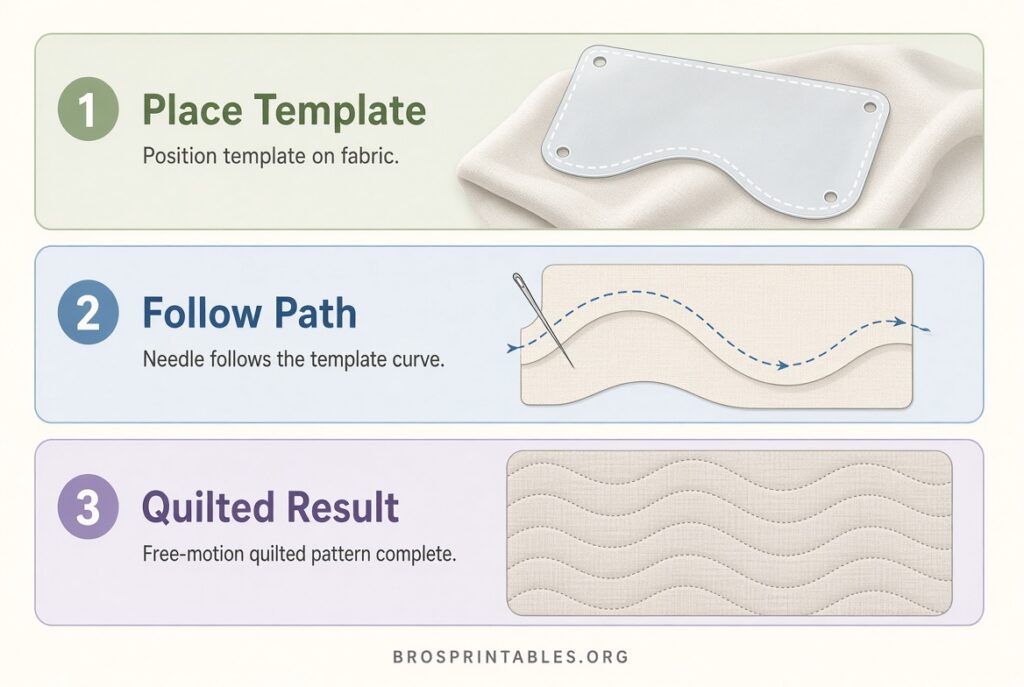
Templates make the process easier. Printable paper templates let you trace designs on practice fabric or use them as guides. Some quilters pin or tape paper designs to the quilt and stitch through them (then remove the paper). Others use templates simply for practice sheets that train the hand before moving to fabric. Physical acrylic or plastic templates (often used with a ruler foot) guide the foot for repeated shapes.
Templates are especially helpful for:
- Building consistency in stitch length and shape
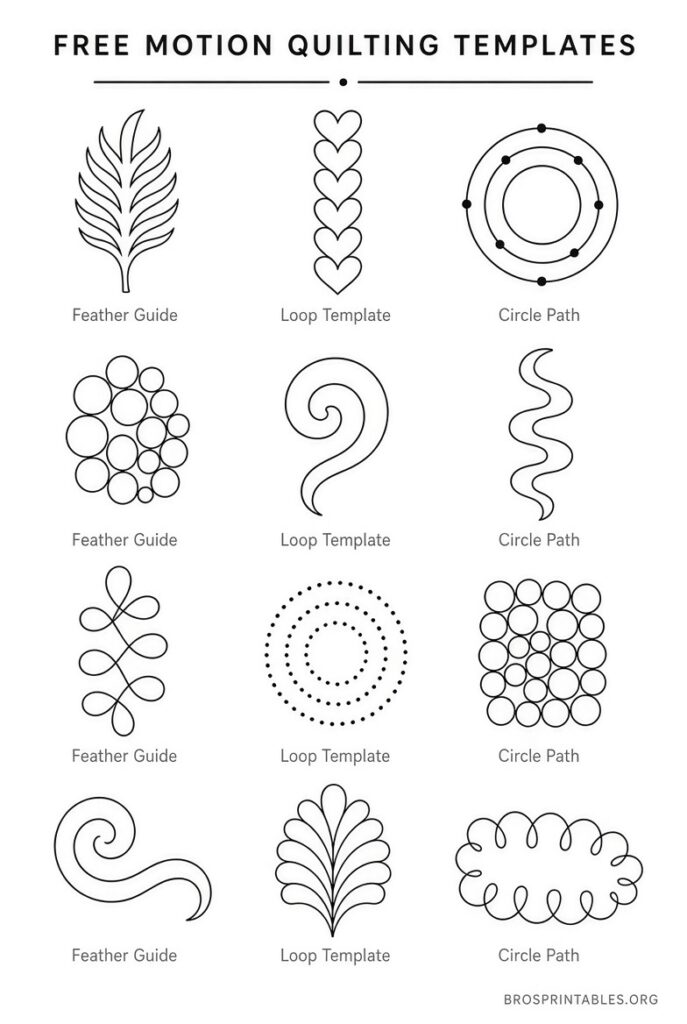
- Learning classic motifs such as feathers, swirls, and loops
- Filling backgrounds quickly with continuous-line designs
- Reducing the intimidation factor for beginners
How to Get Started With Free Motion Quilting Templates?
You need only a few basics that most U.S. quilters already have or can find at any local quilt shop or major craft retailer:
- A sewing machine that allows you to drop or cover the feed dogs
- A free-motion or darning foot
- Quilting gloves or sticky fingertips for better grip (optional but helpful)
- Practice sandwiches made from scrap fabric + batting
- Printable templates and a pen or marker for tracing practice
Simple practice routine:
- Print a free practice sheet.
- Trace the design repeatedly on paper until the motion feels natural.
- Move to a fabric sandwich and quilt the same design at a steady speed, matching hand movement to machine speed.
- Once comfortable, transfer the design to a real project by marking lightly with a water-soluble or heat-erasable marker, or by stitching through paper templates.
Start with continuous-line designs (meanders, loops, simple swirls). These keep you moving without stopping and restarting often.
Where to Find Free Printable Free Motion Quilting Templates?
Here are verified, currently available free resources from established quilting sites. All offer direct downloads of printable PDFs suitable for practice or guidance.
- Chatterbox Quilts provides an extensive collection of free motion quilting practice sheets, including easy designs, loops, flower swirls, feathers, raindrops, geometric shapes, and more. Download individual PDFs directly from the page: Chatterbox Quilts Free Motion Quilting Practice Sheets.
- Collection Inedith offers free forever free-motion quilting and appliqué designs designed for domestic machines. Click the PDF images to open and print patterns such as hearts, feathers, snowflakes, and mandalas: Collection Inedith Free Quilting Patterns.
- The Little Mushroom Cap shares free printable templates alongside clear tutorials. One popular page includes a free feather template with step-by-step instructions; another offers templates for three easy all-over designs (meander, loop-de-loop, and square loop): Feather Quilting Tutorial + Free Printable Template and All-Over Free Motion Designs + Free Printable Templates.
These sources focus on practical, downloadable printables rather than paid stencils or books. Always print at 100% scale and test on scrap first.
Free Motion Quilting With Templates
Practical Tips for Using Templates Successfully
- Practice on paper first. Many free sheets are designed exactly for this muscle-memory step.
- Keep tension balanced and stitch length even by moving the fabric at a consistent speed while pressing the foot pedal steadily.
- For paper templates on the actual quilt, use a longer stitch length so the paper tears away cleanly afterward.
- Begin in the center of the area you are quilting and work outward when possible to manage fabric bulk.
- Combine simple templates: use a swirl or loop as an all-over filler, then add a feather border later.
- Store printed sheets in a binder or digital folder so you can reuse favorites.
Many U.S. quilters progress from paper practice sheets to freehand work within a few sessions. Templates simply accelerate the learning curve.
Frequently Asked Questions
Do I need a longarm machine for free motion quilting with templates?
No. All the free resources listed work on a standard domestic sewing machine with a free-motion foot.
Are the linked printables truly free?
Yes. The sites provide direct PDF downloads without requiring payment or subscription for the templates referenced.
Can I use the same templates on a quilt larger than a practice sandwich?
Yes. Scale the design as needed, or repeat continuous-line motifs edge-to-edge. Some quilters tile multiple printed sheets for larger areas.
What if my stitches look uneven at first?
That is normal. Slow down, focus on matching hand speed to needle speed, and keep practicing the same template until it improves. Most quilters see clear progress after a few practice sandwiches.
Free motion quilting with templates opens up creative options for any quilt size or style. Download a few practice sheets today, set up a simple sandwich, and start stitching. Consistent practice with good templates quickly builds the confidence to finish quilts beautifully on your own machine.