Free Printable Sensory Diet Cards – A sensory diet is a personalized schedule of sensory activities that helps children (and some adults) stay regulated, focused, and ready to learn or engage. Occupational therapists often create them for kids with sensory processing differences, autism, ADHD, or related needs. Sensory diet cards turn those activities into simple, visual, grab-and-go tools that parents, teachers, and therapists can use at home or school.
Free printable sensory diet cards make it easier to offer choices, track what works, and build consistent routines without expensive materials. This page explains what they are, why they help, and where to find legitimate free downloadable resources.
What Are Sensory Diet Cards?
Sensory diet cards are small printable cards (often with pictures and short descriptions) that show specific sensory activities. Categories commonly include:
- Proprioceptive / heavy work (pushing, carrying, jumping)
- Vestibular / movement (swinging, spinning, rocking)
- Tactile (touch textures, brushing)
- Oral motor
- Visual, auditory, or calming strategies
Kids can choose a card when they need input, or adults can schedule a few cards into the day. Many sets also include choice boards or simple tracking sheets so the plan stays flexible.
A true sensory diet is individualized. Cards provide ideas and structure, but the best results come when an occupational therapist helps select and adjust activities based on the child’s sensory profile.
Why Use Free Printable Sensory Diet Cards?
Visual cards reduce decision fatigue for adults and give children a sense of control. They work well for:
- Morning or after-school regulation
- Classroom movement breaks
- Transition times
- Home routines when a child is overstimulated or under-responsive
Print on cardstock, laminate if possible, and keep a set in a binder, on a ring, or in a calm-down corner. Many free versions include both color and black-and-white options so kids can color their own.
Where to Get Legitimate Free Printable Sensory Diet Cards?
Here are trusted, currently available free resources. Always review activities with your child’s occupational therapist before regular use.
Understood.org Sample Sensory Diet
This U.S.-based nonprofit offers free downloadable PDFs with example sensory diet activities for preschoolers and school-age kids, plus a simple tracking worksheet. The materials explain types of input (tactile, movement, heavy work, etc.) and how to note responses before and after activities.
Download the free sample sensory diet and worksheet from Understood.org.
FREE Self-Regulation Sensory Diet Cards on Teachers Pay Teachers
Occupational therapist Dr. Lisa Marnell (Kids Master Skills) offers a free set of 8 kid-friendly illustrated cards covering proprioceptive, vestibular, tactile, oral, visual, auditory, and olfactory activities, plus sample choice boards for different times of day.
Get the free sensory diet cards on Teachers Pay Teachers (free account required to download).
Bloom Autism Support Free Printable Sensory Diet Kit
This free printable kit includes everyday activity ideas, a simple daily plan page, and a log to track what helped. It is designed for parents and therapists working with autistic children and emphasizes trying activities with an OT’s guidance.
Download the free Sensory Diet Kit from Bloom Autism Support.
GriffinOT Free Sensory Diet Cards
Children’s occupational therapist Kim Griffin provides free printable cards (color and black-and-white) focused on alerting and calming movement activities, along with short video examples. Access requires joining their free community mailing list.
Access the free sensory diet cards from GriffinOT.
These sources prioritize occupational therapy principles and do not require payment for the listed free materials. Avoid random image searches or unverified sites that may contain incomplete or unsafe suggestions.
Free Printable Sensory Diet Cards
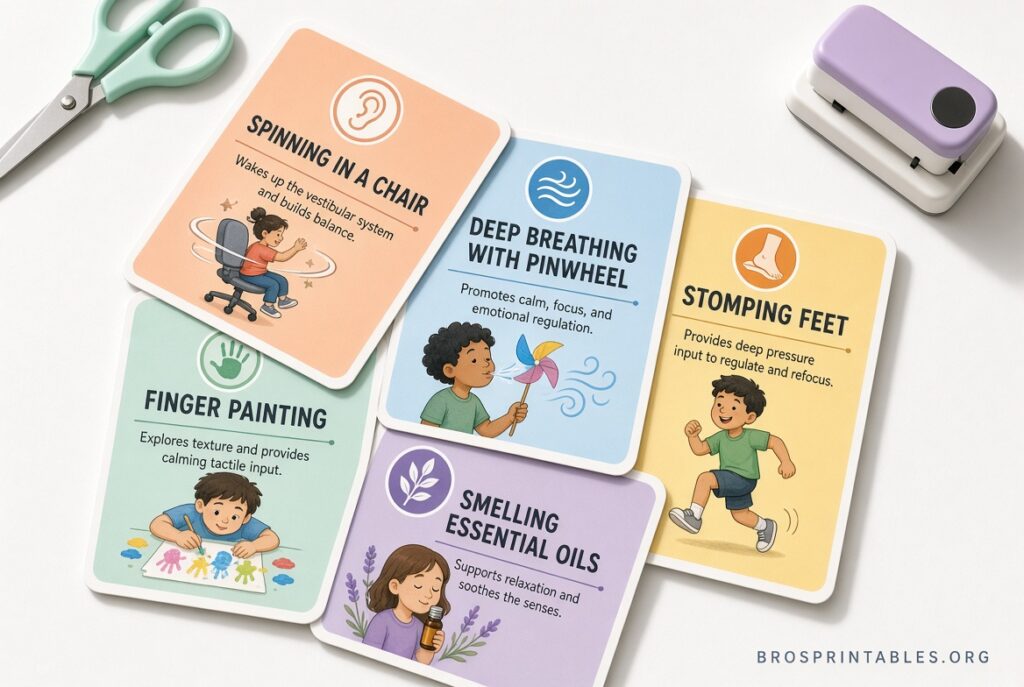
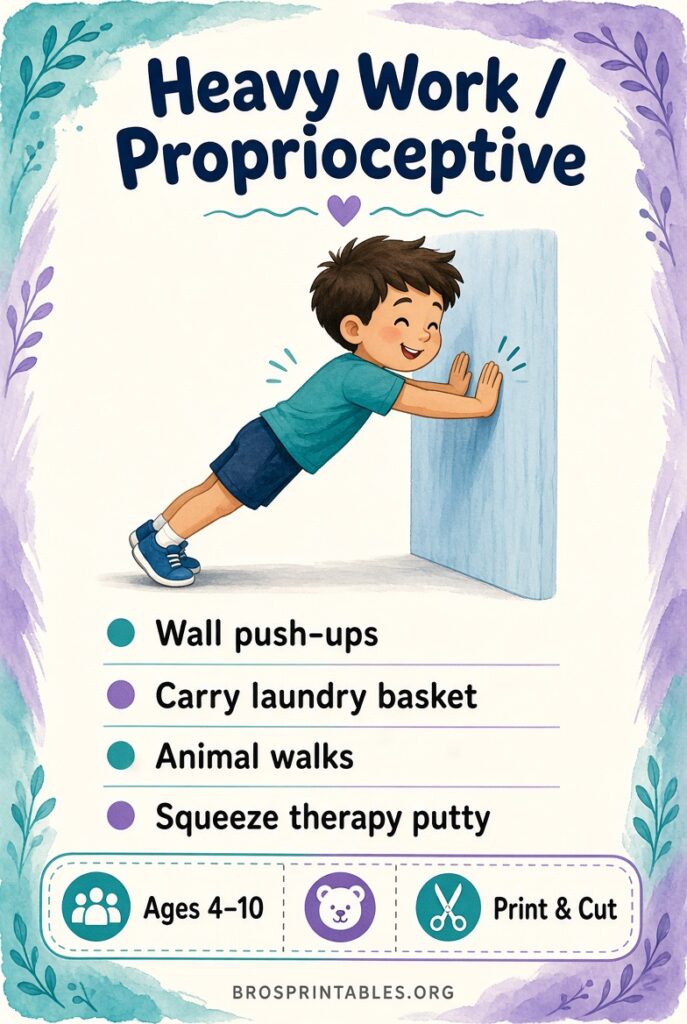
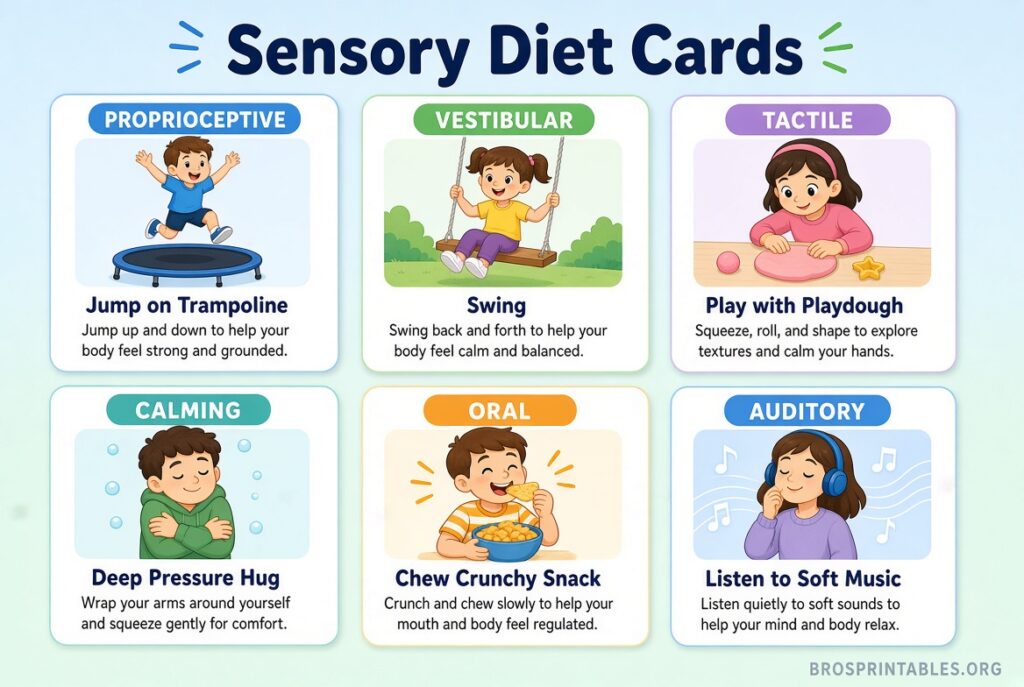
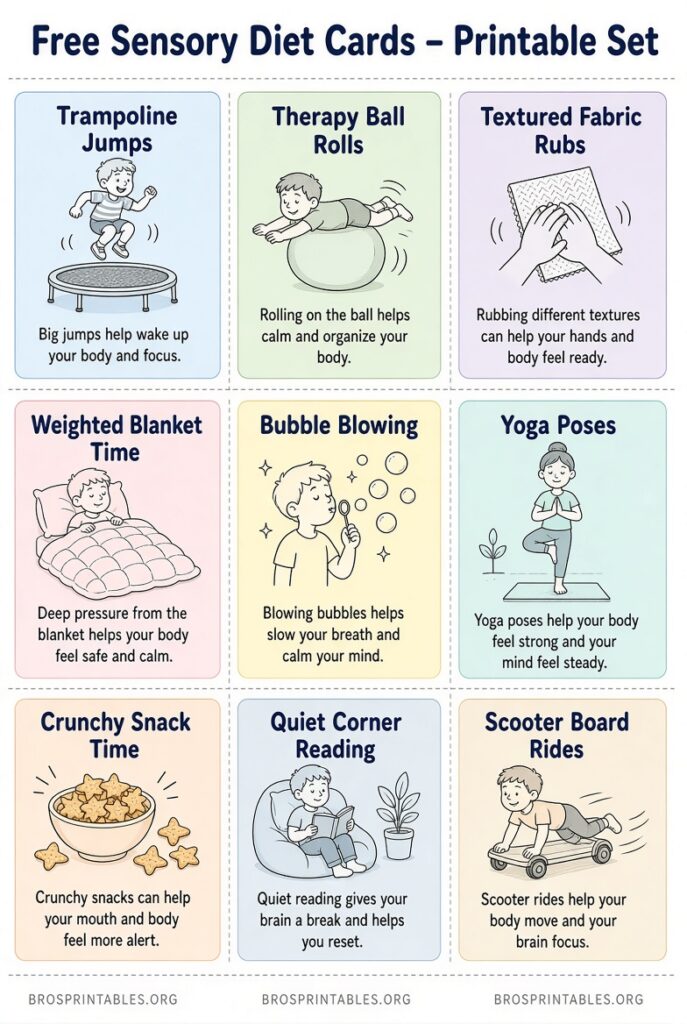
How to Use Sensory Diet Cards Effectively?
- Start with observation or an OT assessment to identify whether the child needs more alerting, calming, or organizing input.
- Print and cut the cards. Laminate for durability.
- Offer 2–3 choices at key times rather than forcing a fixed sequence.
- Note what the child does and how they respond (energy level, focus, mood). Adjust as needed.
- Keep sessions short—often just a few minutes is enough.
- Pair cards with everyday activities (carrying laundry, outdoor play, chores) so the “diet” feels natural.
Consistency matters more than perfection. A few well-chosen activities used daily usually outperform a long list used sporadically.
Tips for Parents and Teachers in the USA
- Check with your child’s IEP or 504 team if sensory supports are part of school services.
- Many school OTs already use similar visual supports.
- Look for low-prep ideas that fit typical American home and classroom environments (push-ups against a wall, animal walks, heavy backpack carries, quiet corner with fidgets).
- Safety first: supervise spinning or heavy work, and stop any activity the child dislikes.
Brief FAQ
Do sensory diet cards replace occupational therapy?
No. They are tools to support a plan developed or approved by a qualified occupational therapist.
Are free printables enough?
They are a strong starting point for ideas and structure. An individualized plan from an OT produces the best long-term results.
Can I make my own cards?
Yes. Use index cards or a free template and add photos or simple drawings of activities that work for your child.
What if my child refuses the activities?
Offer choices, keep sessions brief, and revisit with an OT. Preferences change, and forcing input can backfire.
Free printable sensory diet cards give families and educators practical, visual support for regulation. Start with one of the trusted free downloads above, involve your occupational therapist, and adjust based on what helps your child feel more comfortable and ready throughout the day.