Free Printable Low Sodium Grocery List – Cutting back on sodium is one of the most effective everyday steps Americans can take for better blood pressure and heart health. Most of the sodium people eat does not come from the salt shaker—it is already in packaged, processed, and restaurant foods. A free printable low sodium grocery list makes shopping simpler by highlighting naturally low-sodium choices and the products worth comparing on the label.
This page explains what a low-sodium diet involves, why a printable list helps, where to get legitimate free resources, practical shopping tips, and answers to common questions.
Why a Low Sodium Grocery List Matters?
The American Heart Association recommends no more than 2,300 mg of sodium per day for most adults, with an ideal limit of 1,500 mg for many people, especially those with high blood pressure. Average intake in the United States is well above that.
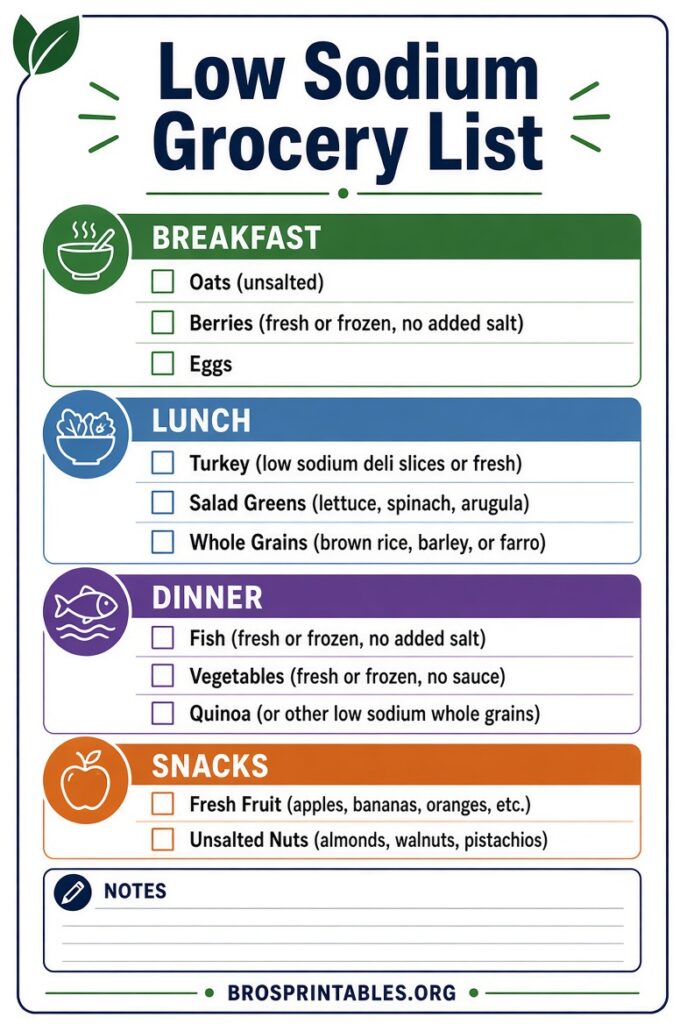
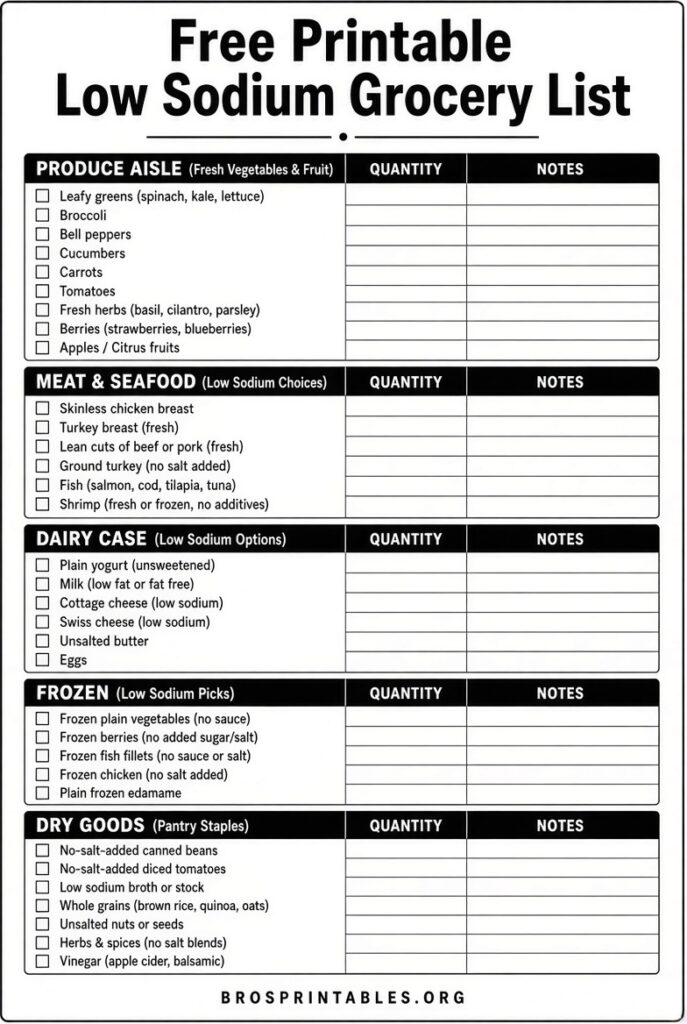
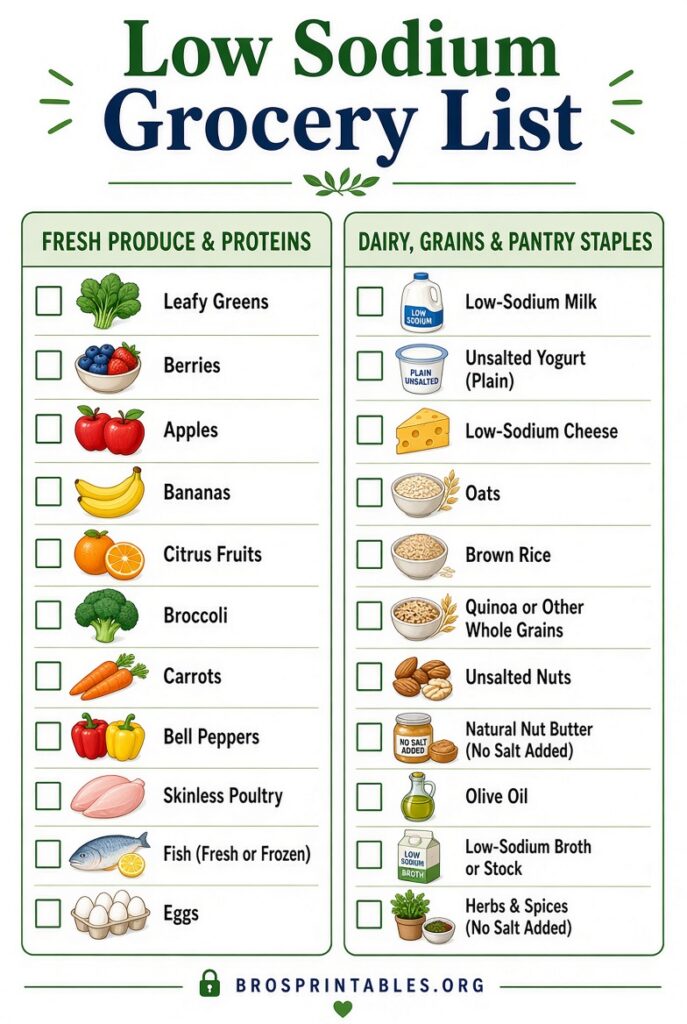
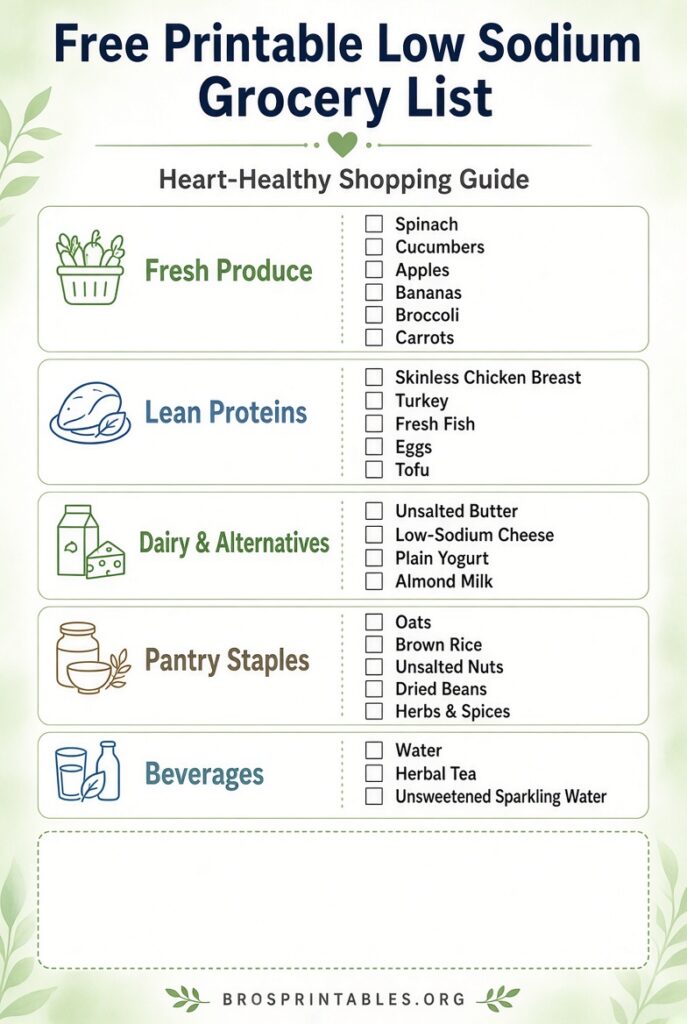
A free printable low sodium grocery list keeps the focus on fresh produce, plain proteins, whole grains without added salt, and no-salt-added canned goods. It also reminds shoppers to check the Nutrition Facts panel for the % Daily Value: 5% DV or less is low; 20% DV or more is high.
Using a list reduces impulse buys of high-sodium staples such as regular canned soups, deli meats, seasoned breads, and bottled sauces.
Where to Get a Free Printable Low Sodium Grocery List?
One of the most practical free printable low sodium grocery lists is offered by Food and Health Communications. It organizes items by category (fresh vegetables and fruits, frozen, canned, dried goods, cereal, bread, snacks, condiments, dairy, poultry/fish/meat) with checkboxes on a single page. A second page covers label-reading rules. The list is free to print and share for personal or educational use.
Download it directly here: Free Low-Sodium Grocery List PDF.
An official U.S. government resource is the MyHealthfinder Lower-Sodium Foods Shopping List from the Office of Disease Prevention and Health Promotion. It lists categories of lower-sodium foods (produce, whole grains, proteins, dairy, dressings, seasonings) and includes clear shopping tips based on the Dietary Guidelines for Americans.
View and use the list here: MyHealthfinder Lower-Sodium Foods Shopping List.
These two sources are free, current, and do not require payment or complex sign-ups for the core list content. Always print from the official page so you receive the latest version.
Free Printable Low Sodium Grocery List
Practical Tips for Using Your Low Sodium Grocery List
- Shop the perimeter first for fresh and frozen produce, plain meats, fish, eggs, and dairy. These are naturally low in sodium.
- For canned goods, choose “no salt added” or “low sodium” versions and rinse beans or vegetables under water to reduce sodium further.
- Compare brands of bread, cereal, and crackers—the sodium difference can be large even when products look similar.
- Skip or limit cured meats, regular soups, seasoned rice or pasta mixes, and most bottled sauces.
- Build flavor at home with herbs, garlic, onion, citrus, vinegar, and salt-free spice blends instead of relying on packaged seasonings.
Carry the printed list or keep a digital copy on your phone. Check it against the store’s selection and update it with your preferred brands that meet the low-sodium criteria.
Common Label Claims Explained
- Sodium-free: less than 5 mg per serving
- Very low sodium: 35 mg or less
- Low sodium: 140 mg or less
- Reduced sodium: at least 25% less than the regular product (can still be high)
- No salt added / unsalted: no salt was added during processing (natural sodium may still be present)
Focus on the milligrams and % Daily Value rather than marketing phrases alone.
Brief FAQ
How much sodium should most adults aim for each day?
No more than 2,300 mg, with many experts suggesting an ideal target of 1,500 mg, especially if blood pressure is elevated.
Does rinsing canned foods really help?
Yes. Rinsing and draining can remove a meaningful portion of the sodium from canned beans and vegetables.
Are all fresh foods automatically low in sodium?
Fresh fruits, vegetables, unseasoned meats, poultry, fish, and eggs are naturally low. Watch for injected solutions or marinades on some poultry and meats.
Can I still eat bread and cheese on a low-sodium plan?
Yes, but compare labels carefully. Choose lower-sodium breads and limit higher-sodium cheeses or use small amounts of stronger-flavored varieties.
A free printable low sodium grocery list turns general advice into an actionable tool you can take to the store. Start with the Food and Health Communications PDF and the official MyHealthfinder list, then adjust the selections to match your preferences and local availability. Consistent use of these resources, combined with label reading and home cooking, supports long-term heart-healthy eating.