Free Printable Baseball Field Diagram – Looking for a free printable baseball field diagram? Whether you coach a youth team, teach positions in class, help a new player learn the diamond, or just want a clear visual of the field, a simple printable diagram is one of the most useful tools you can have.
This page explains what a baseball field diagram shows, lists standard U.S. dimensions, and points you to legitimate free downloadable resources you can print right away.
What a Baseball Field Diagram Shows?
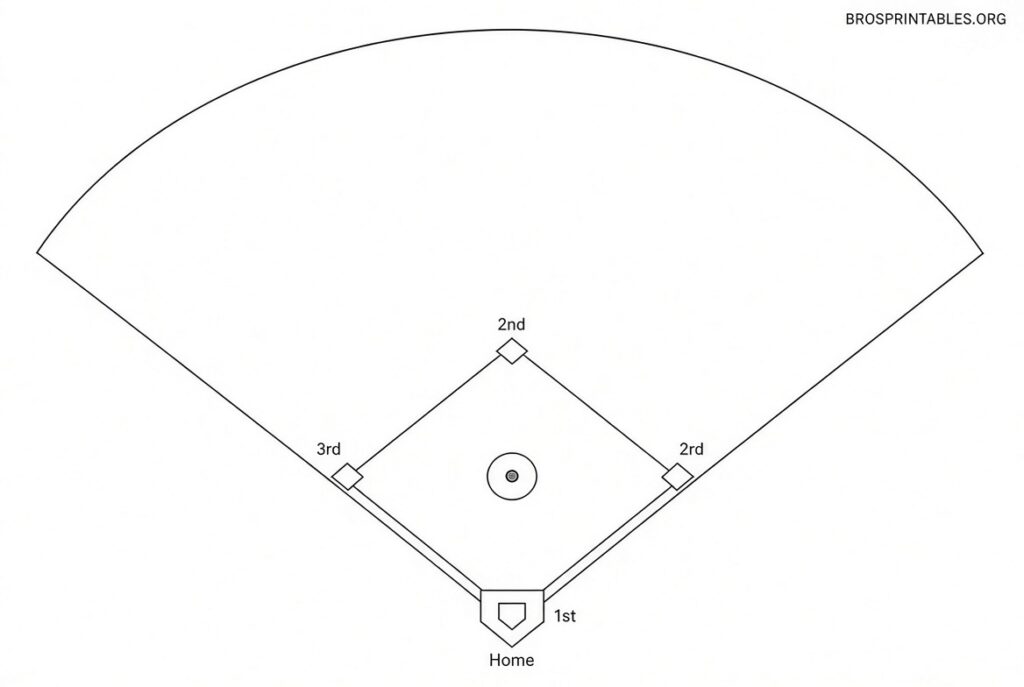
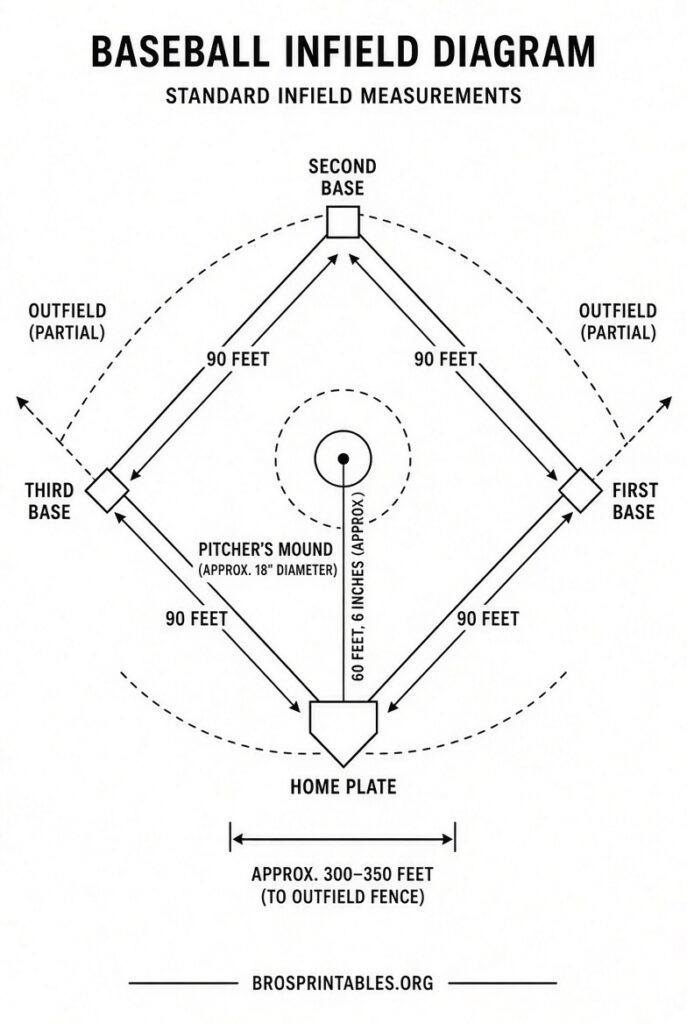
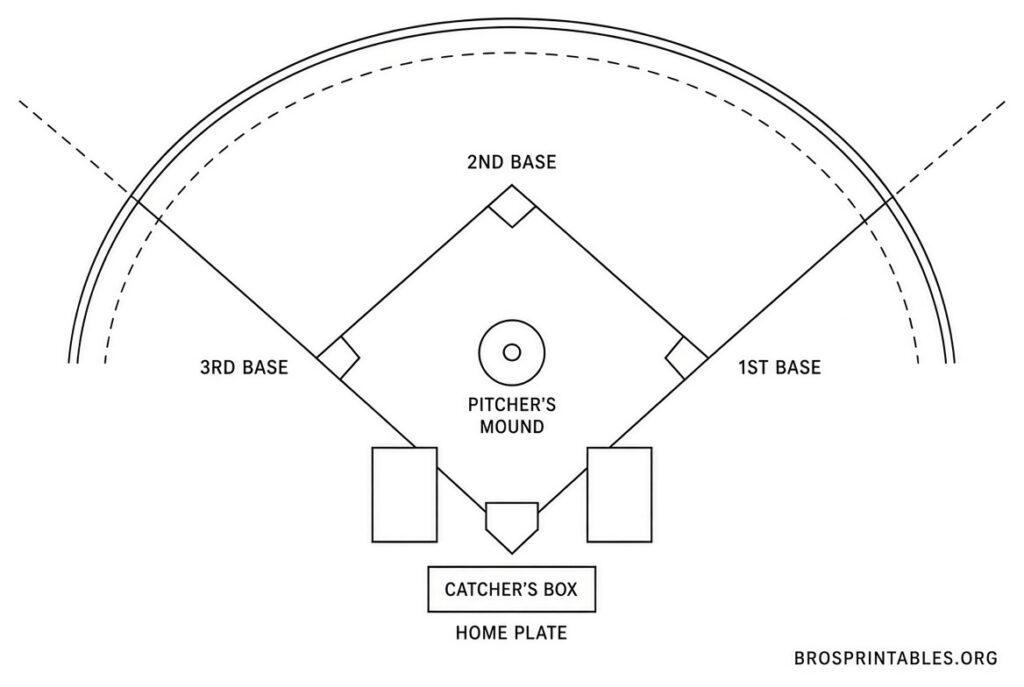
A baseball field diagram is an overhead view of the diamond and surrounding field. Good ones typically include:
- Home plate, first base, second base, and third base
- The pitcher’s mound and rubber
- Foul lines
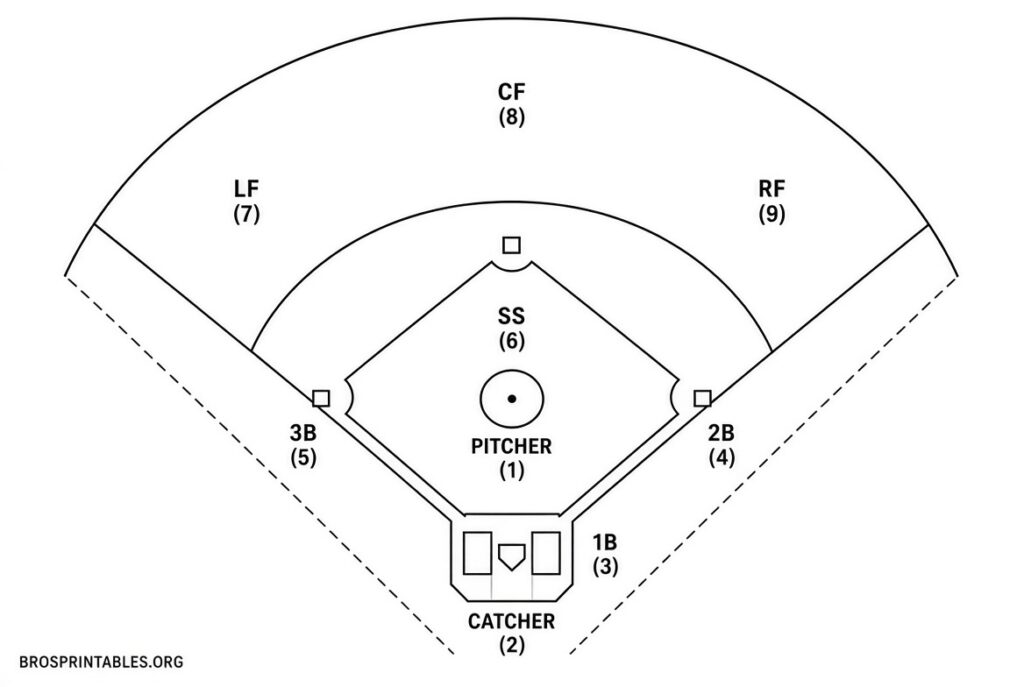
- The nine defensive positions (often numbered 1–9 for scorekeeping)
- Key distances such as base paths and pitching distance
Some versions are labeled for teaching; others are blank so coaches can draw plays, defensive shifts, or practice stations by hand.
Standard Baseball Field Dimensions (USA)
These measurements follow common regulation standards used in Major League Baseball, high school, and many college fields:
- Base paths: 90 feet between bases
- Pitching rubber to home plate: 60 feet 6 inches
- Home plate to second base: approximately 127 feet 3 inches
Youth fields are smaller. Little League (Majors) typically uses 60-foot base paths and a 46-foot pitching distance. Intermediate (50/70) fields sit in between. Always confirm the exact dimensions required by your league before marking a field.
Best Free Printable Baseball Field Diagrams
Here are reliable places that offer free printable baseball field diagrams (no invented links or paid claims):
- Sports Brackets – Baseball Field Diagram (Free PDF) — Two-page free PDF with a labeled diagram showing the nine positions and key dimensions, plus a blank version for quizzes or drawing plays. No sign-up required. Ideal for coaches, parents, and teachers.
- Sun Catcher Studio – Baseball & Softball Field Diagrams — Free PDF and PNG templates, including plain diamond outlines and labeled/colored versions. You can download directly or customize colors before printing.
- Apollo Templates – Baseball Field Diagrams — Free letter-size blank diamonds in portrait and landscape orientations. Download a clean unmarked version or use their tool to add position labels, player names, or a team logo before saving the PDF.
These three sources provide clean, ready-to-print files that work well on standard letter paper. Print in color for teaching or grayscale to save ink.
Free Printable Baseball Field Diagram
How to Use Your Printable Diagram?
- Hand the labeled version to new players so they learn the nine positions and numbers used in scorekeeping (1 pitcher, 2 catcher, 3 first base, 4 second base, 5 third base, 6 shortstop, 7 left field, 8 center field, 9 right field).
- Use the blank version to sketch defensive alignments, bunt coverages, or cutoff plays.
- Laminate one for the dugout clipboard or practice station.
- Give younger kids a blank diagram as a coloring or labeling activity.
Quick Tips for Printing
Print at “Actual Size” or 100% scale so proportions stay accurate. Use heavier paper or card stock if the sheet will be handled outdoors. For youth teams, pair the diagram with a simple explanation of the smaller field dimensions your league uses.
FAQ
Is there a free printable baseball field diagram with positions?
Yes. The Sports Brackets PDF includes a labeled version with all nine positions numbered, and Apollo Templates lets you add labels if you want them.
Do these diagrams show official dimensions?
The best free printables follow standard 90-foot base paths and 60-foot-6-inch pitching distance. Always cross-check with your league’s official rules for youth or modified fields.
Can I use these for Little League or other youth levels?
Yes. Use the blank diagrams and note the correct shorter distances (for example, 60-foot bases and 46-foot pitching rubber for Little League Majors) on the sheet.
A clear free printable baseball field diagram makes it easier to teach positions, plan practices, and help players understand the game. Download one of the resources above, print a few copies, and keep them in your coaching bag or classroom materials.